Table Of Content
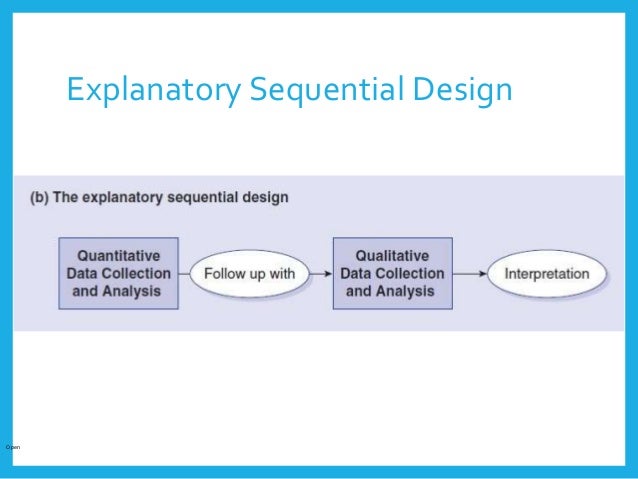
This study adopted a coding process by Adu [49]; however, for reliability, it followed the seven-stage Framework Method by Gale et al. [50], as shown in Table 3. It follows that the intercoder reliability method described and recommended by Freelon [51], Neuendorf [52], Mayring [53], Krippendorff [44] and Hayashi et al. [48], amongst others, was adopted in this study. Everitt and Skrondal [54] and Krippendorff [55] describe the inter-rater agreement as to the coordination level between multiple investigators, assessors, or empirical evaluations. This approach was selected to ensure that sources of errors in coded interview data were eliminated or minimised. The common complexity of mixed methods design poses a problem to the above typologies of mixed methods research.
5. Results from the Statistical Analysis
That diffraction can assume a broadening of integration due to the fracturing of data that could occur in the research process and distort the object of study [28], presenting in the social sciences a way of capturing the complexity intrinsic to the ontology of the social entity being studied. This paper provides guidelines for using the exploratory sequential approach in mixed-method research to effectively deal with contextual issues based on non-parametric modelling data in top leadership H&S interventions. The main focus was established by extensively providing elements that demonstrated rigour in a qualitative and quantitative study in a mixed-method environment and by distinctly placing a sequential study into the relevant context for this type of research.
1. PHASE 1: Qualitative Analysis (Diagnosis)
It was characterised by non-probability purposive sampling to establish a theory based on the conceptual model and hypothesis. The second phase, QUAN, comprised the pilot stage of the survey study, where non-probability convenience sampling was applied to 10% of the target sample as a pilot study to establish the tool’s validity. The third stage, characterised by random probability sampling, used the developed survey questionnaire to gather perspectives on top leadership commitment to H&S by applying QUAN. Typological and interactive approaches to mixed methods research have been presented as mutually exclusive alternatives. The interactive approach of Maxwell is a very powerful tool for conducting research, yet this approach is not specific to mixed methods research.
Lifespan Development
This paper considered the target population as the top leaders of the construction organisations in South Africa at all nine levels of the CIDB. The contextualism approach to philosophy is reinforced by the national culture and construction industry for this typology. The description of conceptual restrictions by Babbie [27], which range between Meta (South Africa), Macro (Construction sector), Meso (Top organisational leadership) and Micro (Leadership commitment), is applied consistently in the typology [26]. Similarly, the relationship between work, health or educational and occupational strategies has already been studied in Argentina by Gallart and in Spain by Valisachis de Gialdino [22,23].
To apply the O’Brien-Fleming design more aggressively, one could plan the first stage analysis at a later time point. For example, having the first interim analysis after 70% of the samples already means that about 1.5% of alpha are spent at stage 1. The fullness of the interview questions established the preliminary interview validity and whether the intended group was attained [44].
Accordingly, all interview questions are based on a conceptual typology proposed by Gogo and Musonda [26], which depicts how each leadership aspect relates to each respondent’s H&S aptitude for each contextual determinant. This allows the researcher to examine how the model depicts leadership commitment related to H&S in its full context by accurately representing the respondent [39]. The background knowledge was derived from the literature review’s output and synthesised into eight hypotheses, forming a typology.
The scientific literature shows the scarce use of mixed methods for solving problems of social phenomena. It has all of the benefits of cross-sectional and longitudinal studies, but it can be a very steep investment of one's time, energy, and resources. Longitudinal studies involve observing a single group multiple times over a period of time.
The support of the CIID in developing bibliographic materials and access to databases is acknowledged. Please include what you were doing when this page came up and the Cloudflare Ray ID found at the bottom of this page. All rights are reserved, including those for text and data mining, AI training, and similar technologies.
Methods
The process to achieve this is the conception of prospective thinking, strategic action, and ownership to model pessimistic and optimistic scenarios to facilitate decision-making, with the generation of valuable frameworks and alternative actions chosen according to the researcher’s expertise [43]. Thus, the present study aims to design a predictive model about a complex social phenomenon’s different behaviours through fuzzy inference modules. To this end, we start with an exploratory analysis of trends and, additionally, we resort to the generation of synthetic data (Monte Carlo simulation) to determine possible futures (futuribles) based on the analysis of actors and scenarios (see Figure 4).
The exploratory sequential technique is distinct from the explanatory sequential technique because it explores a concept before validating it, allowing for greater versatility in discovering novel ideas offered by the QUAL approach [2]. Numerous projects characterised by novel instrument creation choose this method as it enables the scholar to construct the instrument using QUAL information and afterwards verify it quantitatively [1,3]. This is undertaken to handle the complexities of the resultant model characteristics because the contextual setting of top leadership is uncertain of the H&S culture’s consequences. Hence, it is advisable to perform validation or tests on the QUAN part of the model [3,5]. Triangulation increases confidence, overcomes the reductionism of approaches, and, if there are congruencies in the conclusions, confers the results’ reliability and validity [4]. A convergent model can be considered when researchers need to use qualitative and quantitative data concurrently to compare results.
Optimality criteria for futility stopping boundaries for group sequential designs with a continuous endpoint - BMC ... - BMC Medical Research Methodology
Optimality criteria for futility stopping boundaries for group sequential designs with a continuous endpoint - BMC ....
Posted: Thu, 05 Nov 2020 08:00:00 GMT [source]
For example, if after our 10-year-long study on aging we found that people with darker skin appeared to age better, then we can go back and examine the exact amounts of melanin in their skin. Another option is cross-sectional design, defined as sampled groups along a developmental path in an experiment to determine how development influences a research variable. Instead of taking one group of people and following them for 60 years, we take 4 groups of people and study them now. Our first group is all 20-year-olds, the second group is 40-year-olds, and so on. This saves us time because we can do all the research now instead of over 60 years. Cross-sequential designs are a good way to observe multiple groups over time, such as men and women.
The group is then observed a second time after the treatment is administered to see if the variable of interest can be linked to any significant effects. It's common for longitudinal studies to include several observations over long periods of time. A rigorous approach for designing an exploratory, sequential research method using both interviews and survey data was created in this work. The tool’s novelty was established in its point of departure from the norm in applying reliability tools prior to testing for normality and applying a rigorous process of multi-tool intercoder reliability, which also adopted a web-based tool to augment the spreadsheet calculations. Using generalised linear modelling in a study of this kind also signifies a point of departure from the norm. According to Bajpai [9], the tool used to gather data must be dependable and repetitive to be useful.
Applying both QUAL and QUAL approaches to single research works offers a more significant opportunity to establish more insight into the study subject, whilst a higher degree of validity and accuracy are achieved compared to applying a single approach [10,11]. In addition to the six primary design dimensions or considerations, we provided a set of additional or secondary dimensions/considerations or questions to ask when constructing a mixed methods study design. Our purpose throughout this article has been to show what factors must be considered to design a high quality mixed methods research study. The more one knows and thinks about the primary and secondary dimensions of mixed methods design the better equipped one will be to pursue mixed methods research. The fifth design dimension is that of typological vs. interactive design approaches.



No comments:
Post a Comment